
This lesson task I were to chose one camera technique that contributed to the art for Photography. I had to do research and write a report in my own words on why I think the technique I chose contributed to what we are able to do today through Photography.
– Explain my research and choice of technique.
– Include images which I think is necessary to explain my thought process.
– The report should be 500 – 1000 words.
Daguerreotype
I chose to write about the Daguerrotype. It is not the first technique and it is an intermediate step in the art of Photography, but the intermediate step was a big step and changed the history.
The inventor and the constructor of the technique was Louis Jacques Mandé Daguerre (1787 – 1851).
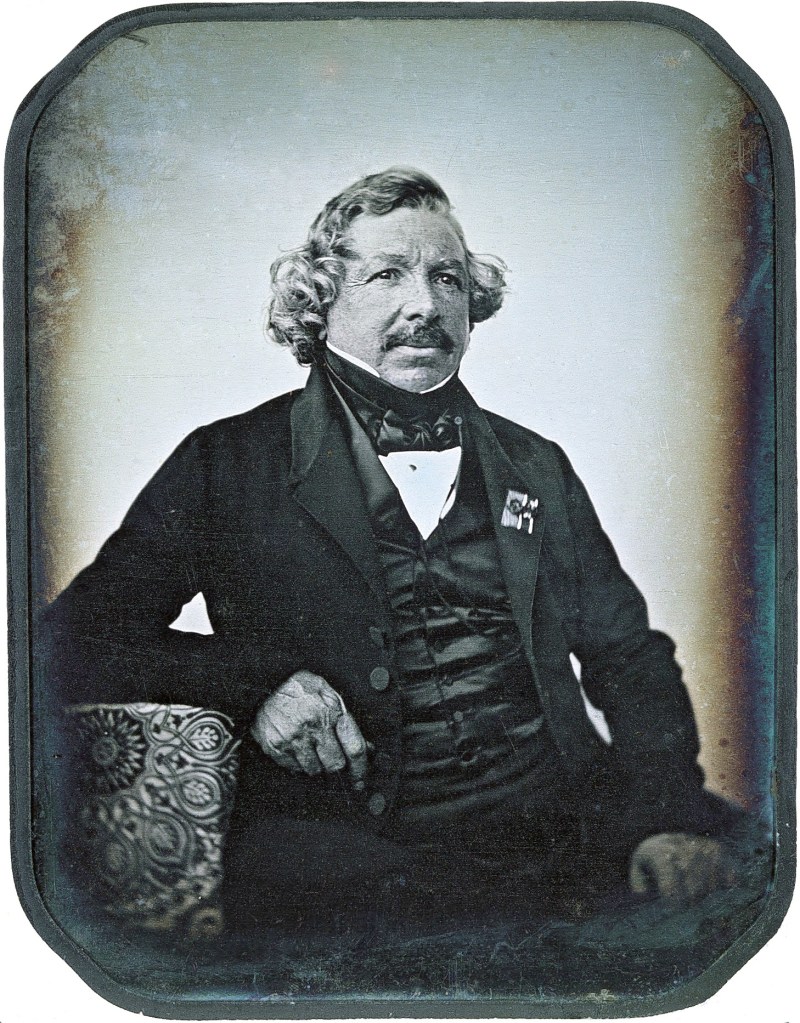
He was a Frenchmen who worked as an assistant to Pierre Prévost to perform theatrical scenes. The scenes were complex and realistic. To create these advanced scenes as fast as possible, Daguerre used Camera Obscura (a latin word meaning «dark room») – the predecessor to camera.
His interest in Camera Obscura led him to a collaboration with Niepce in 1829, who had tried to use asphalt as a photoemulsion. Daguerre himself, started to experiment with different metal films and around 1831 he succeeded to manufacture thin layers of light-sensitive silver iodide. Daguerre had tried to shorten the exposure time, which was necessary to obtain an image of the real world.
The exposure time was shorten, but the results was not permanent. The image or the picture, was no longer visible when it was exposed to light. Not many years later, in 1837 Daguerre was able to fix this, by using a solution of table salt to dissolve the unexposed silver iodide. That year he produced a detailed photograph of his studio and the technique Daguerrotype was invented.
The process of Daguerrotype:
- First he placed a very polished sivler-plated-copper sheet with the silver side down over a container of iodine crystals. This is how he created a light-sensitive silver iodine plate.
- Then the iodine plate was placed in a camera.
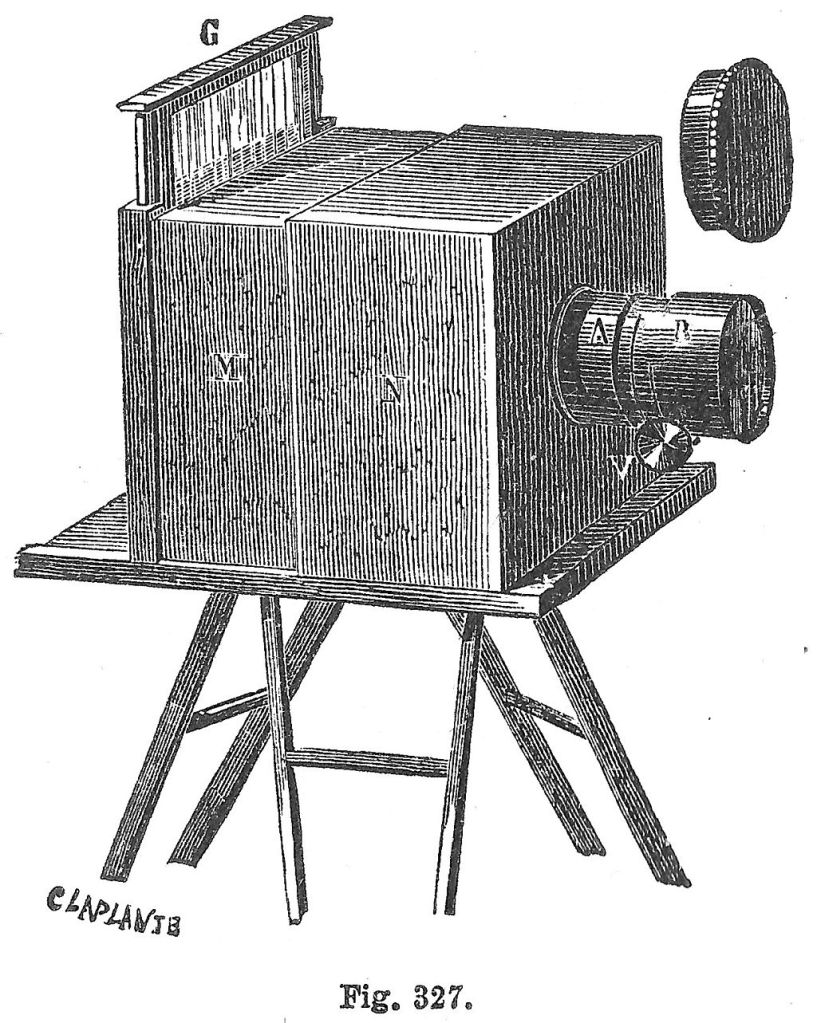
The plate was placed in the camera in a way that made the light from the lens fall on the plate and produced an invisible image.
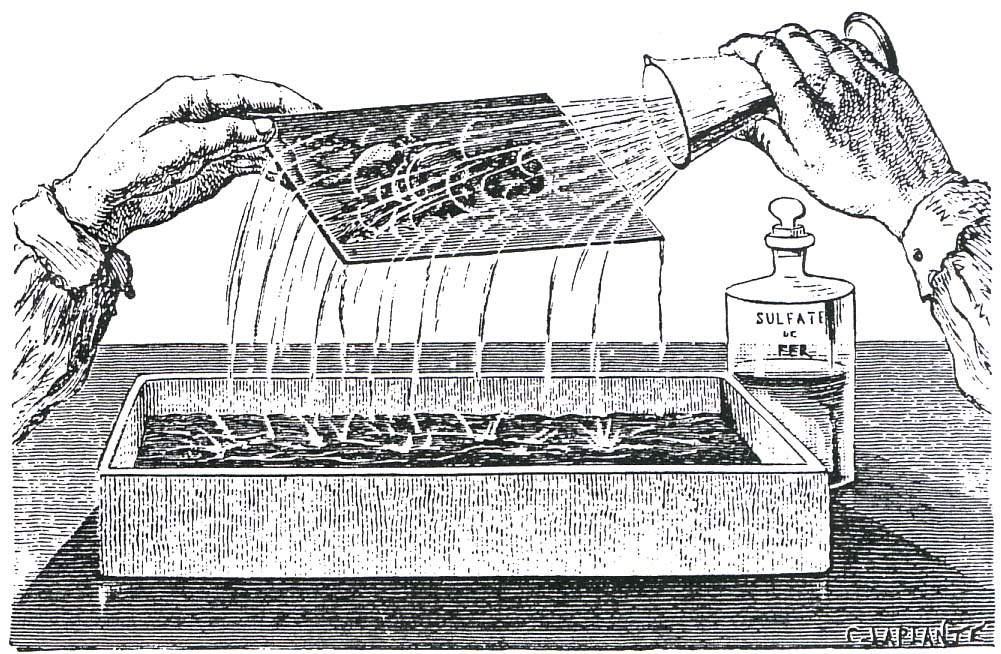
- To reveal the invisible image he had to expose it to the vapour dish of heated mercury. This made an alloy where areas of exposed silver and unexposed silver were removed.
- The last thing was to fix the image by bathing it in salt bath.
A typical Daguerrotype portrait studio:
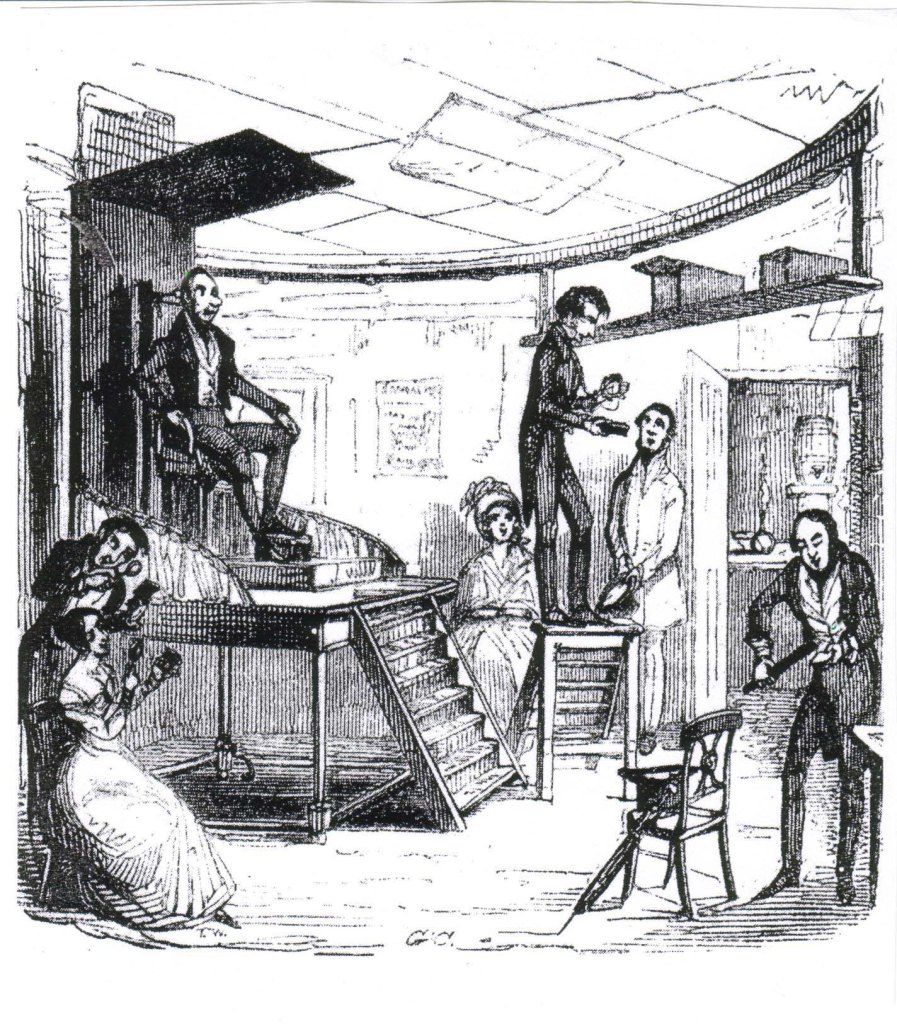
In the image you can see a Daguerrotype studio and the job to take a photograph. It was often in a top of a building, which had glass roof to let in a lot of light. The subject was placed high and the subjects head was held still by a clamp. There were an assistant in the studio to polish the silver coated plate and an operator to place the plate into a camera placed on a high shelf. When the subject was ready, the operator removed the camera cover and timed the required exposure with a watch.
The finished Daguerrotype images was very delicate and easily damaged. So the images always came in protective cases. It had a sheet of protective glass and was presented in a leather, lined with silk or velvet case.
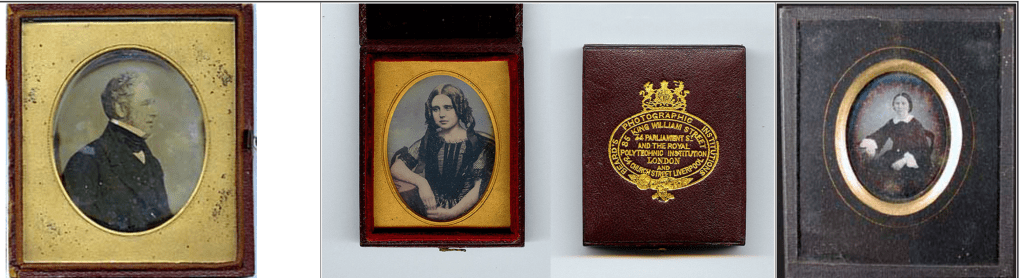
Today we have forgotten the privilege we have when it comes to take a picture. It is easy, you can just make one click on your phone and then you have a photo ready. The easiness has also made us forget the importance of what a photograph have told us through history of man. «A picture says more than a thousand words». It has made us able to make a moment in real life last forever. Daguerrotypes made us able to preserve our history. The news services at that time used these techniques to cover the Crimean War and the American Civil War.
Before Daguerrotype, there was no way people knew how people looked, unless they met them in real life or had a lot of money to get a painter to make them a portrait. Daguerrotype made it easier, affordable and possible for people to see their ancestors and know the history. Photography gave us poof of what really happened and how people really looked.
Daguerre shared his technique with the world and made it possible for all people to use it. From this big leap in the history of photography it made it possible to take it further and from this we learned better and easier ways in photography to take us where we are today.
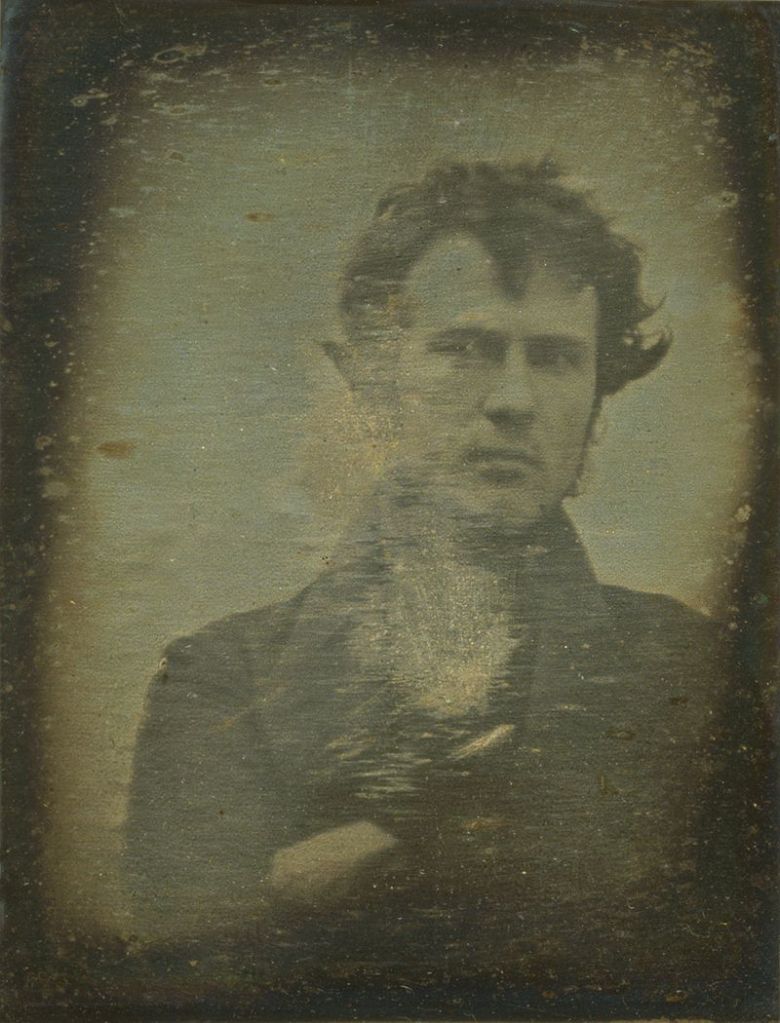
The first selfie was given to us by Daguerrotype technique in 1839 by the American photographer Robert Cornelius:
Resources:
https://no.wikipedia.org/wiki/Louis_Daguerre
https://no.wikipedia.org/wiki/Daguerreotypi
https://www.britannica.com/technology/photography/Daguerreotype
https://www.photohistory-sussex.co.uk/dagprocess.htm
https://edition.cnn.com/style/article/eye-of-sun-national-gallery-photos/index.html

 cathrinenilsen.com